Our women-only outpatient heroin rehab in Marin County provides specialized treatment for addiction and co-occurring disorders. Through PHP, IOP, and OP, clients receive personalized, evidence-based treatment for long-term sobriety.

Heroin addiction often affects physical health, emotional well-being, relationships, and a woman’s ability to manage everyday responsibilities. At Honeycomb Wellness Center in Marin County, we provide women-centered outpatient treatment for heroin addiction and co-occurring disorders such as anxiety, depression, or post-traumatic stress disorder (PTSD). Our dual diagnosis approach helps clients understand the factors contributing to addiction while addressing substance use and mental health together.
Many clients transition to our program after medical detox or residential treatment, while others begin care following clinical assessment. Our licensed clinicians and certified addiction specialists maintain a small client-to-staff ratio, ensuring every woman receives personalized clinical attention. Treatment is adapted as each client progresses, ensuring care remains responsive to clients’ goals, challenges, and stage of recovery.
Our programs last three to six months, depending on individual progress. In this timeframe, clients step down from Partial Hospitalization (PHP), Intensive Outpatient Program (IOP), and Outpatient (OP). With our trauma-informed therapy, relapse prevention planning, and peer support, women create lasting stability, healthier relationships, and a future no longer shaped by heroin addiction.
As a trusted provider of substance abuse treatment in Marin County, we know no two recovery journeys look the same. Our approach adapts to fit each woman rather than the other way around. From clinical care to holistic practices, every part of our gender-specific treatment works together to help women build genuine self-awareness and a life beyond addiction, not just abstinence.
We believe healing involves the whole person, not just the symptoms of substance use disorders. Our treatment model addresses the biological, psychological, social, and spiritual aspects of recovery. Evidence-based care, mindfulness practices, experiential therapies, and wellness-focused programming all work together to support this approach.
From PHP and IOP to outpatient therapy, each level of care is designed to build on the last. Progress made in one stage carries directly into the next. As women approach the end of treatment, planning shifts toward securing outside resources, relapse prevention, and transitional support. We help coordinate continued care and outside resources to support long-term recovery.
Women leave with a deeper sense of self-worth and the practical life skills needed to manage daily responsibilities, return to school, or re-enter the workforce with confidence. Our goal extends past sobriety alone, helping each woman reintegrate into her family, career, education, and community as someone she recognizes and respects.
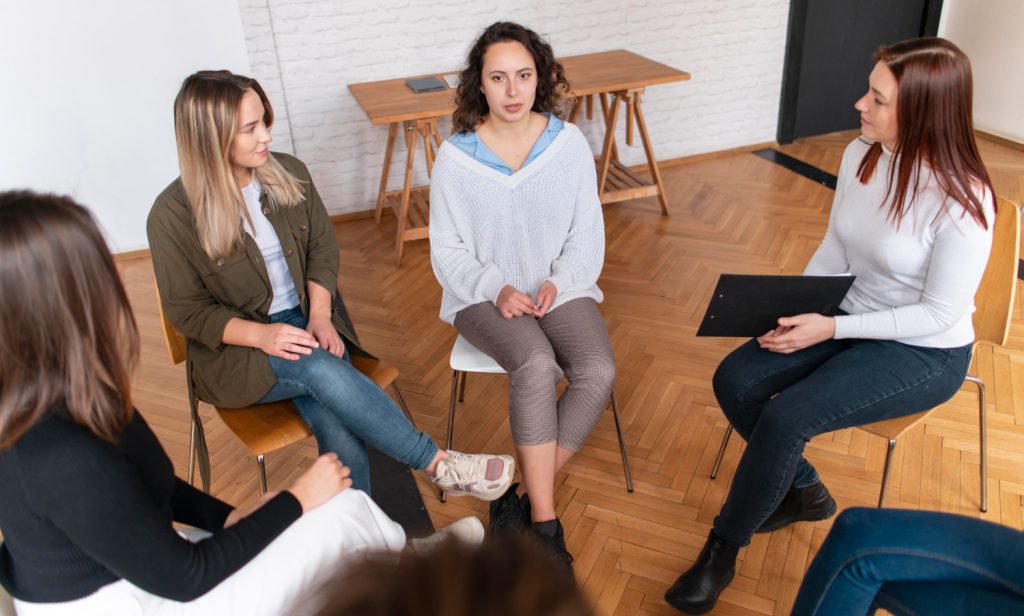
Substance use disorders are often shaped by trauma, relationships, or societal pressures that are rarely addressed in mixed-gender settings. Treating women separately creates space for these experiences to surface without the added dynamic of gender-based judgment or distraction. Our programs create space to heal alongside women who share similar experiences, with group and individual therapy grounded in safety, trust, and mutual support.
Recognizing that women enter recovery carrying unresolved trauma, every treatment is planned around her unique history, needs, and goals. Our clinical team combines trauma-informed modalities like eye movement desensitization and reprocessing (EMDR) with cognitive-behavioral therapy (CBT), dialectical behavior therapy (DBT), motivational interviewing, and individual counseling. The center offers a haven to heal without judgment or re-traumatization.
Loved ones are welcomed into the recovery process through family education and, when appropriate, family therapy sessions that build understanding and repair strained relationships. Women build lasting connections through peer support, 12-step communities like Alcoholics Anonymous, and an active alumni network that keeps them engaged after they complete treatment.


Heroin addiction is a complex opioid use disorder (OUD) that can quickly create physical dependence, intense cravings, and changes in the brain’s reward system. Effective treatment addresses the full impact of heroin addiction by supporting withdrawal management, healing underlying psychological distress, and developing skills for long-term recovery.
Warning signs of heroin addiction include increasing tolerance, strong cravings, withdrawal symptoms between doses, strained relationships, and continued use despite serious consequences. Noticing even a few of these signs in yourself or someone you love is reason enough to seek professional support before the risks grow more severe.
If you or someone you know experiences difficulty breathing, loss of consciousness, severe confusion, or thoughts of self-harm, call 911 immediately, since emergency response can be life-saving during an overdose. Early substance use treatment gives women the best chance at reducing harm, rebuilding stability, and reconnecting with the life heroin use has disrupted.

Overcoming heroin addiction requires clinical care that adapts as a woman restores her physical stability, emotional regulation, and daily independence. Our three structured outpatient programs treat substance use disorders and co-occurring mental health conditions simultaneously. This continuum of care secures uninterrupted clinical support as women transition from higher levels of care toward long-term sobriety.
PHP provides our highest level of care and serves as a step-down for women completing medical detox or residential rehab. Clients attend intensive treatment five days a week, engaging in evidence-based individual therapy, therapist-led group sessions, and comprehensive clinical support, and return home each evening.
Our IOP offers structured clinical care three days per week, providing the ideal balance between therapeutic guidance and real-world flexibility. Women focus on CBT, trigger management, and practical relapse prevention skills while managing personal, family, or professional schedules.
OP delivers flexible weekly therapy for women who have established strong foundational stability and are transitioning into complete independence. Ongoing sessions emphasize long-term sobriety strategies, stress management, family dynamics, and continuing care networks to reinforce lasting recovery.
Sustained recovery from heroin addiction requires a comprehensive, whole-person framework that nurtures every aspect of a woman’s well-being. Our holistic continuum of care centers on four core elements of human integrity: biological stabilization, psychological healing, social reintegration, and spiritual reconnection. Addressing these interconnected dimensions together helps uplift women through education, self-awareness, and lasting behavioral change.

Consistent structure provides stability during treatment by replacing the unpredictability of substance use disorders with purposeful routines. Each day includes planned therapy, activities, and goals that help women build accountability, strengthen coping skills, and prepare for full autonomy.
Care is delivered by a compassionate team of licensed therapists and certified specialists who specialize in gender-based substance use treatment. With low client-to-staff ratios, our clinical team provides highly individualized treatment planning tailored to each woman’s recovery requirements.
We remove barriers to consistent treatment by offering reliable transportation assistance to and from our outpatient heroin rehab in Marin County. Transportation support helps keep daily therapy sessions stress-free and manageable throughout treatment.
We prioritize sustainable outcomes by equipping every client with actionable relapse-prevention strategies, strong coping mechanisms, and ongoing aftercare planning. Our goal is to empower women with the self-efficacy and support network to maintain lifetime sobriety and independent living.
Women’s recovery is often shaped by factors that require more than traditional addiction treatment. Higher rates of trauma exposure, caregiving roles, relationship pressures, and co-occurring disorders call for an approach that is both clinically specialized and deeply compassionate. Our outpatient heroin rehab in Marin County meets those needs while empowering women to reclaim confidence and purpose.
Women experiencing heroin addiction frequently carry a history of unresolved trauma that requires gentle, specialized clinical care. Our trauma-informed care ensures therapeutic interactions prioritize physical and emotional safety, helping clients heal underlying wounds at a comfortable pace.
Healing from addiction isn’t limited to traditional therapy; it also includes experiences that encourage reflection, connection, and personal growth. We integrate experiential options like art therapy, meditation, mindfulness practices, and somatic movement to help women regulate their nervous systems and discover creative outlets for self-expression.
Rebuilding healthy support systems is vital to long-term recovery, helping both clients and their loved ones manage expectations and meet each other where they are. Clients can choose to involve loved ones in weekly or monthly family therapy sessions to improve communication and help the home unit move forward together.
One-on-one therapy provides a confidential, focused space to examine personal triggers, process complex emotions, and track clinical progress. Working closely with a dedicated primary therapist, each client receives guidance to refine the individualized treatment plan.
Treatment includes more than the time spent in therapy sessions, often involving community resources, employment, education, and other personal responsibilities. Through individualized treatment planning, women work with case managers to align clinical goals with personal priorities and create an evolving treatment plan.
Sustained sobriety relies on mastering concrete, real-world tools that prevent setbacks during everyday stress. Through focused skill-building, clients learn practical trigger management, healthy boundary-setting, and routine-building strategies to protect long-term recovery.
Women enter treatment carrying experiences they have often tried to manage alone, sometimes turning to heroin as a way to cope with emotional pain, stress, or unresolved mental health concerns. Trauma, unhealthy relationships, postpartum challenges, and caregiving responsibilities can create moments where substances feel like an escape from overwhelming emotions.
Our dual diagnosis approach helps women address co-occurring disorders while developing self-awareness, healthier coping tools, emotional regulation, and boundaries through individual and group therapy. We strive to understand the woman behind the addiction while helping her reconnect with herself, nurture stronger relationships, and experience meaningful transformation.

Our team supports clients using physician-prescribed medications as part of withdrawal management or medication-assisted treatment (MAT). While our center doesn’t provide medical detox, prescribe medications, or offer MAT directly, we help clients stay on track with their medication plan as they work toward their broader recovery goals.
We stay closely involved in each woman’s treatment by supporting medication adherence, monitoring psychiatric medications, and coordinating with outside prescribers. Ongoing coordination with prescribers helps clients stay stable while they continue developing the skills needed for long-term recovery.
Healing thrives within a supportive, shared environment where no woman has to navigate recovery alone. Our program cultivates an enthusiastic resident community enriched by active alumni engagement, where peer encouragement inspires accountability and practical resilience. We actively integrate families as emergency contacts and include them in educational workshops and care planning.
At Honeycomb Wellness Center, we believe heroin addiction doesn’t define who a woman is or limit what her future can become. Through structured outpatient treatment, compassionate clinical support, and unwavering sisterhood, you can rediscover self-trust, confidence, and connection.
Recovery isn’t perfect or linear, and community plays an important role in helping women navigate its challenges together. With the right support, guidance, and willingness, clients can restore their lives one step at a time. Timely treatment can help you reconnect with your goals, work, family, friends, and most importantly, yourself.

Yes, we offer same-day admissions whenever clinically appropriate, helping women transition into outpatient care. Our admissions team responds to inquiries and referrals within approximately 15 minutes during designated call hours and can assist with legal requirements or CPS processes. Many clients join us through warm hand-offs from detox or residential treatment, allowing for continuity of care.
Inpatient treatment requires clients to reside full-time at a rehabilitation center with 24/7 medical supervision. It’s often essential during acute detox or residential stabilization. Outpatient care allows clients to live at home while attending structured clinical therapy during the day or evening.
The length of heroin rehab varies based on each woman’s clinical needs, progress, and recovery goals. Many clients participate in outpatient treatment for approximately three to six months, transitioning through levels of care such as PHP, IOP, and OP as stability increases.
Most major health insurance plans cover substance use disorder treatment and co-occurring mental health services under behavioral health benefits. Coverage specifics depend on your individual insurance provider and policy details. Our admissions team can verify your benefits and walk you through your coverage options to minimize out-of-pocket expenses.
Yes, our substance use services include treatment for cocaine addiction, methamphetamine use, fentanyl, and more.
