
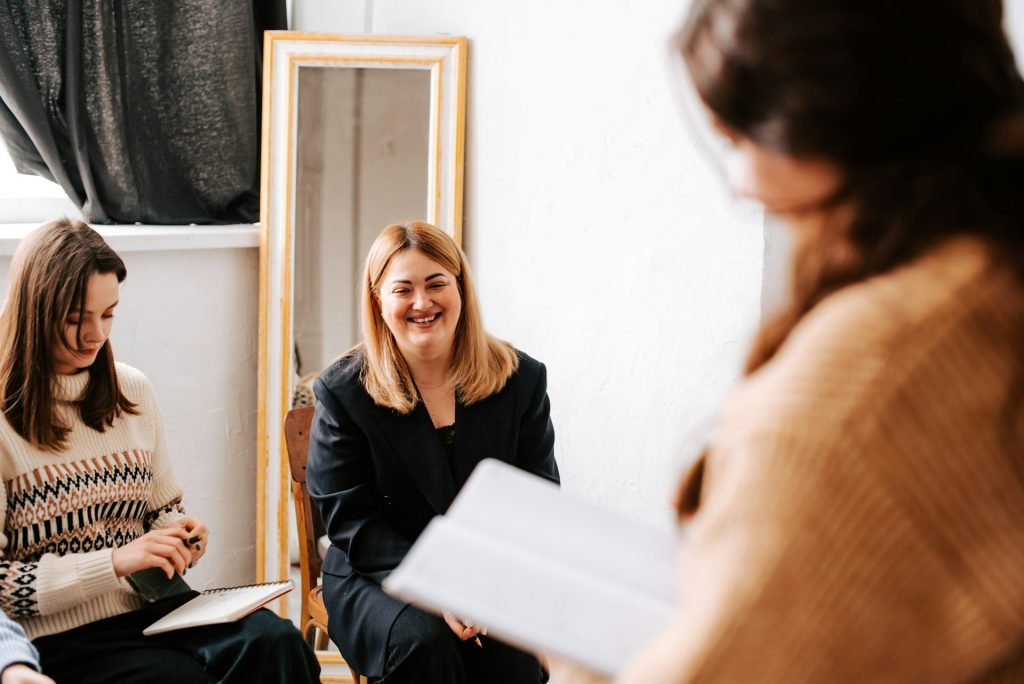
Finding the Group Counseling Format That Fits You
Choosing a women’s group counseling program can feel like one more hard decision on a long list. You might already be balancing work, family, and your own recovery, and the idea of joining a group can bring up a lot of questions. The format you choose really does matter. It can change how safe you feel, how much you open up, and how much support you actually receive week to week.
There are many types of group counseling, but three common formats are process groups, skills-based groups, and trauma-informed or trauma-focused groups. Each one has a different purpose, pace, and feel. At Honeycomb Wellness Center, we are a women-only, trauma-informed, holistic outpatient program in Marin County, and we offer several group formats across PHP, IOP, and OP levels of care. Our goal is to help you find the mix of groups that fits who you are and what you need right now.
Process Groups for Women in Recovery
Process group counseling is about what is happening inside you and between you and others, right now, in real time. In these groups, you talk about your week, your relationships, your triggers, and your emotions. The focus is not just on telling stories, but on noticing how you feel as you talk and how you connect with the other women in the room.
Process groups tend to be a good fit if you want to look more closely at your inner world. They can be especially helpful if you are:
- Struggling with shame or guilt related to substance use
- Wanting to understand patterns in relationships or dating
- Dealing with body image, self-worth, or parenting stress
- Curious about why some triggers feel so powerful
In a process group, you can expect to:
- Practice giving and receiving honest, respectful feedback
- Build emotional language, so you can name what you feel
- Notice how you respond to closeness, conflict, or support
- Take small risks in being vulnerable with a guided safety net
The therapist guides the conversation, keeps the space safe, and helps you connect your group experience to your recovery. Over time, the group becomes a place where you do not have to pretend everything is fine. You get to show up as you are.
Skills-Based Groups for Practical Tools
Skills-based group counseling is more structured. Instead of open sharing being the center, the focus is on learning and practicing specific tools that support your recovery and mental health. These tools might come from approaches like DBT, CBT, relapse prevention planning, mindfulness, or distress tolerance work.
Skills groups often work well if you:
- Are early in recovery and need clear, concrete strategies
- Have a busy schedule and like sessions that follow a clear plan
- Want help managing cravings, anxiety, mood swings, or sleep
- Prefer learning step-by-step methods you can use right away
A typical skills-based group might include:
- A brief check-in to see how people are doing
- Psychoeducation about a topic, like triggers or thinking patterns
- Guided exercises or role plays to practice the new skill
- Simple homework to try between sessions
These tools can be especially helpful during times of change, like school breaks, travel, or shifts in work routines. When life gets less predictable, having practiced skills for grounding, saying no, or riding out urges can keep you from slipping into old habits.
Trauma-Informed and Trauma-Focused Groups
Trauma and substance use often connect in complex ways, so understanding the difference between trauma-informed and trauma-focused groups can be important. Trauma-informed care means that every part of the group, from the way the room is set up to how the therapist responds, is shaped by an understanding of trauma and safety. Trauma-focused groups go a step further and are designed specifically to work with traumatic experiences when that is appropriate for you.
This kind of support may be helpful if you have a history of:
- Emotional, physical, or sexual abuse or assault
- Medical or birth trauma
- Grief and loss that still feels very raw
- Long-term, repeated stress that affected your sense of safety
In both trauma-informed and trauma-focused groups, you can expect:
- Clear group agreements about respect, confidentiality, and pacing
- Choice about how much you share and when you share it
- Grounding and calming exercises built into the session
- A focus on keeping your nervous system regulated, not flooded
You are not pushed to tell your whole story at once. The goal is to move at a pace that feels safe enough so that healing is possible without leaving you overwhelmed.
How to Choose the Right Format for Your Needs
There is no one “right” kind of group counseling for everyone. The best format is the one that matches your current needs, stability, and energy. A few simple questions can help you check in with yourself:
- Do you mainly want to understand your emotions and patterns more deeply? A process group may fit.
- Do you want clear coping tools for cravings, stress, or mood? A skills-based group might help most.
- Do you need extra care around trauma, safety, and pacing? Trauma-informed or trauma-focused groups may feel more supportive.
It can also help to think about:
- Where you are in recovery: early stabilization or deeper healing
- How much time you can commit: PHP, IOP, or OP level
- How much emotional energy you have for sharing versus learning tools
At Honeycomb Wellness Center, our clinicians work with women to combine formats, like pairing a trauma-informed process group with a skills-based group. That way, you can both build coping tools and explore deeper patterns in a way that feels contained and supported.
What to Expect in Your First Group Session
Starting group counseling can bring up nerves, even if you know it is the right step. The first session is usually about getting oriented and helping you feel as safe as possible. While every group is a little different, many first sessions include:
- A gentle check-in and welcome from the therapist
- Brief paperwork or reminders about logistics
- Introductions, often with just a few simple facts about each person
- A review of confidentiality and group agreements
You might feel anxious, guarded, hopeful, or all three at once. That is completely normal. Skilled facilitators respect your pace. You are not expected to share your whole story or talk about your most painful memories right away. You can start with small bits: how your day is going, why you chose the group, or what you hope to get out of it.
Some practical details that often help:
- Sessions usually run a set length, often around an hour or a bit longer
- Group size is kept small enough so everyone has some space to talk
- For virtual groups, cameras are usually on so you can see each other
- Short breaks may be built in for longer groups
In your first session, “participation” may simply mean listening, introducing yourself, and noticing how it feels to be in the room with other women who understand recovery. You are allowed to ease in. Over time, many women find that group becomes one of the most grounding parts of their week, a place where they can show up, be real, and not feel alone.
Take The Next Step Toward Healing With Supportive Community Care
At Honeycomb Wellness Center, we are here to help you find strength, connection, and understanding alongside other women who truly get what you are going through. Explore how our group counseling can support your recovery in a safe, compassionate space. If you are ready to talk about what you need and how we can help, contact us today to get started.